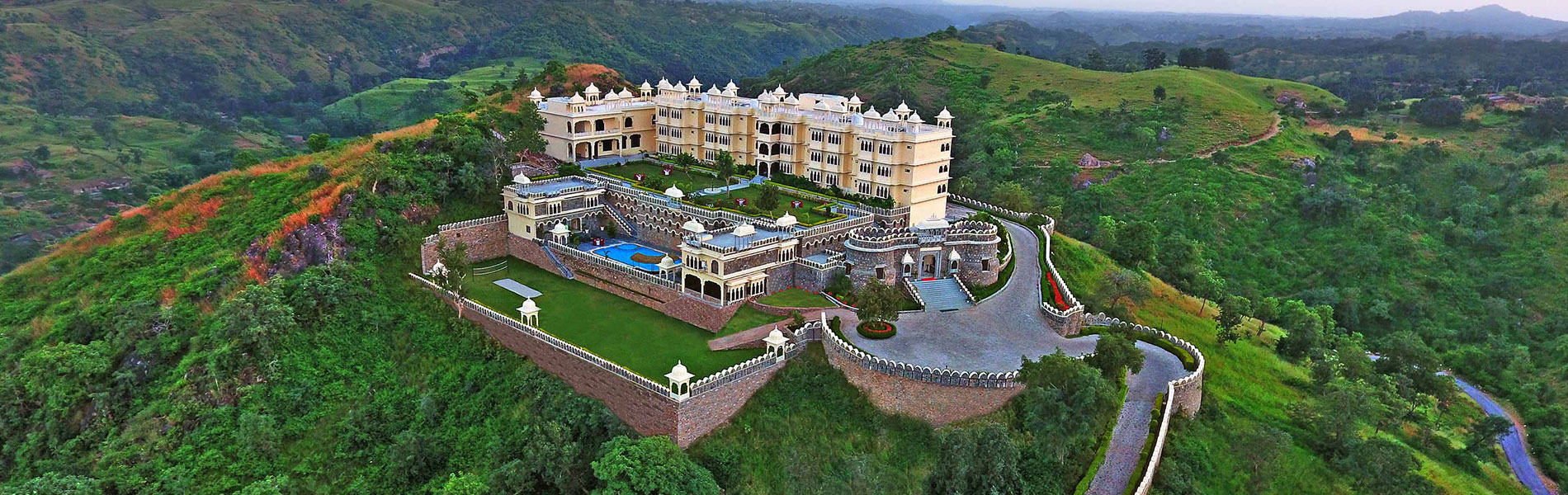
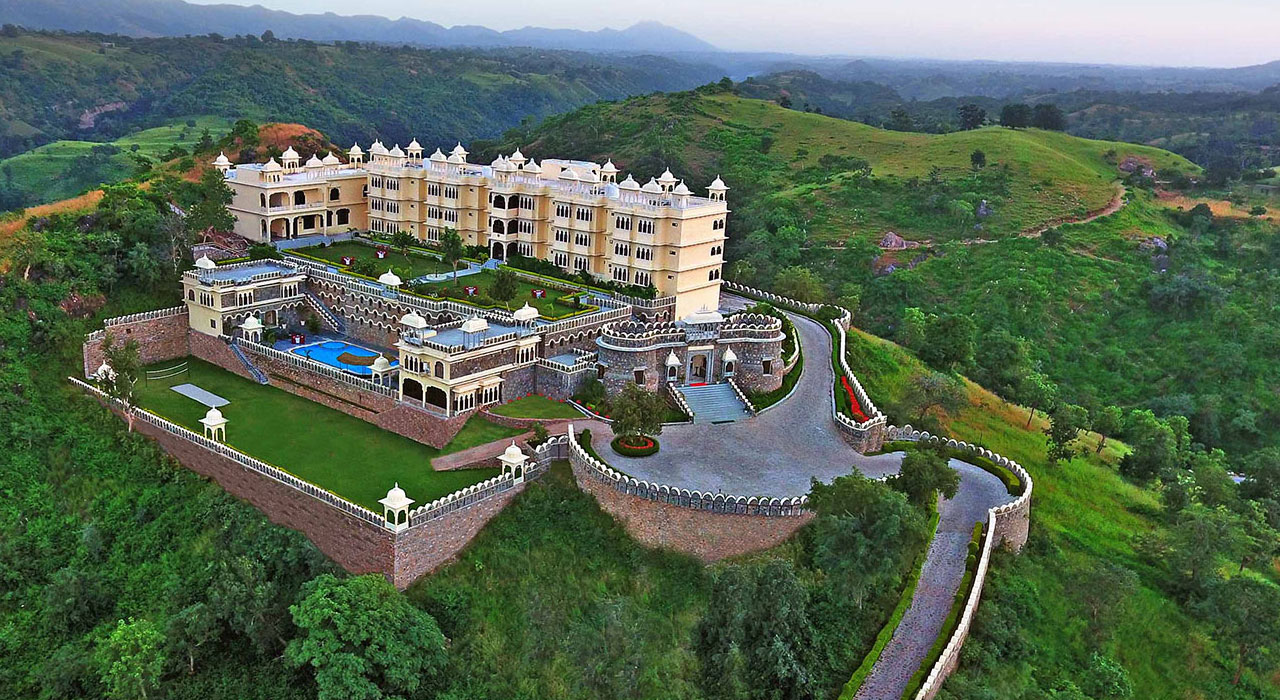
You're welcomed at Maharana Pratap Airport/Udaipur City Railway Station in Udaipur by our representative and taken to Kumbhalgarh. En route you can visit Shri Eklingji Prabhu Temple. Built by Bapa Rawal, the founder of the Mewar Dynasty, in the 8th century, the temple and premises are made up of marble stones with colourfully painted statue of Lord Shiva’s Nandi Bull. Along with the Eklingji Temple, you find the 10th century Saas Bahu Temples, dedicated to Lord Vishnu. The walls of these temples have elaborately carved attractive sculptures which through their spiritual aura exude a serene and calming impact on the visitors. Once you reach the hotel in Kumbhalgarh, take a good rest! Overnight Stay at Kumbhalgarh
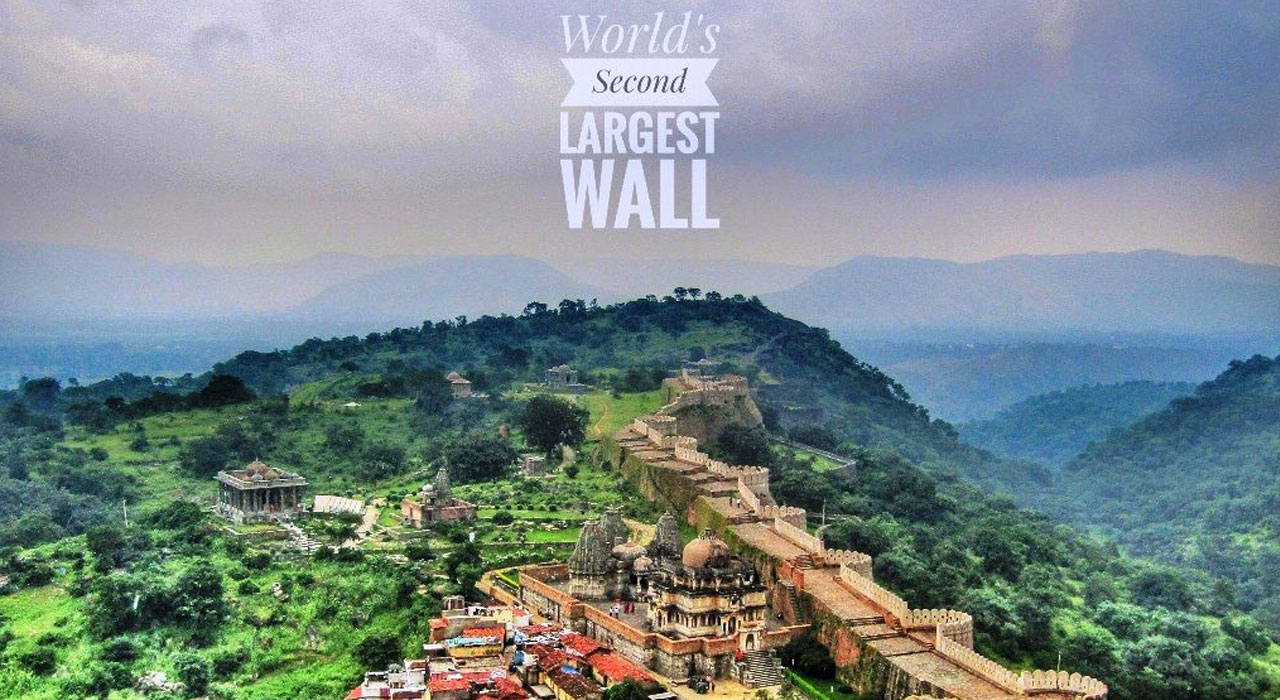
Today brace yourself up for a full-day sightseeing tour of Kumbhalgarh! Start with visiting Kumbhalgarh Fort! Kumbhalgarh Fort is one of the five hill forts of Rajasthan that were declared the UNESCO world heritage site in 2013. Situated in the foothills of Aravalli ranges in Rajsamand district of Rajasthan, around 84 kms from Udaipur, Kumbhalgarh Fort and its encircling walls were constructed over 15 years, from 1443 to 1458 in the reign of Rana Kumbh of the Mewar Empire. Mandan, a celebrated architect of those times, is credited to have designed the massive structure. The fort’s wall is 36-km long, the second longest in the world, after the Great Wall of China. The fort is bounded by 13 hill-peaks of the Aravalli ranges and is located on a height of 1,914 metres from the sea-level. There are over 360 temples within the fort premises. Seven gates or Pols make up Kumbhalgarh Fort. The primary entry point to the fort is Ram Pol. The surrounding forest is a wildlife sanctuary, namely Kumbhalgarh Wildlife Sanctuary. The fort is also the birthplace of Maharana Pratap, one of the most powerful kings of Mewar. Spread over a total surface area of 578 sq. km and stretching across the Aravalli ranges, Kumbhalgarh Wildlife Sanctuary enfolds parts of Udaipur, Rajsamand and Pali. The sanctuary has many species of Chinkara, Sloth Bear, Leopards and Wolves with over 200 species of birds, including Parakeets, Grey Jungle Fowl, Dove and many more. River Banas originates from the hills near the Kumbhalgarh Fort. Once you’re roaming around Kumbhalgarh Fort, you find Badal Mahal or Palace of Clouds. The highest point of this Palace of Clouds offers a breathtaking sight of the surroundings. The monument is separated into two parts, namely Zanana and Mardana Halls, which translate to halls for Ladies and Men. The palace’s interior walls and décor carry sparkling murals and paintings. Supremely planned and designed ventilation all through the palace amazes you to the core. Another famous temple, which stands inside the premises of the Kumbhalgarh Fort, is the Vedi Temple. Vedi Temple is a popular Jain temple, dedicated to the Goddess Vedi. The temple has been built in an octagonal shape, which stands on 36 pillars. It’s the only sacrificial remnant in India, which was built by Rana Kumbha in honour of the sacrifice of the pilgrims. The structure is maintained by the Archaeological Survey of India. Later, go to visit Neelkanth Mahadev Temple! This temple, which houses a 6 ft. Lingam of Lord Shiva, was built in 1458. Neelkanth Mahadev Temple presents a glorious architecture with inscriptions on pillars, elaborate carvings on walls, gorgeous sanctum and open mandapas. The temple is characterized by its idol of Lord Shiva, which is made from a single black Kasoti stone. Go to Haldighati, which is etched in Indian history, for it was the site of the historical battle between Maharana Pratap Singh and the Mughal army! This place is named after the predominant yellow colour of the area’s soil, that resembles Turmeric or Haldi. You get to see a memorial of Maharana Pratap Singh and a statue of his loyal horse, Chetak here. Parshuram Temple is a cave temple that is dedicated to Lord Shiva. You’ve to go down 500 stairs from the hillock to reach the temple. The legend is that the Hindu sage Parshuram stayed and meditated at this site. Apart from Lord Shiva, you find an idol of Lord Ganesh also here in this temple. Then you get to see 9 Kunds or Ponds that normally never run dry. Later go to Muchhal Mahavir Temple, which is situated at a distance of nearly 50 kms from the Kumbhalgarh Fort!! As the name suggests, you get to see a grand and massive idol of Lord Mahavir here that has a moustache. The temple premises have elephant statues, augmenting the aura of its architecture. If time permits, go to Jawai Bandh Leopard Conservation Reserve, which is about 83 kms away from the Kumbhalgarh Fort! Officially named as a leopard reserve in 2010, Jawai Bandh Leopard Conservation Reserve is known for its high leopard-density, where leopard sightings are common. Having Leopard Safari here is some experience. Jawai Bandh is a picturesque dam located in the Pali district of Rajasthan. Come back to the hotel in Kumbhalgarh! Overnight Stay at Kumbhalgarh
Today after Breakfast, you'll be dropped off at Maharana Pratap Airport/Udaipur City Railway Station for your onward journey. Kumbhalgarh has a special place in your heart and memory now.
Day 1 You're welcomed at Maharana Pratap Airport/Udaipur City Railway Station in Udaipur by our representative and taken to Kumbhalgarh. Once you reach the chosen hotel in Kumbhalgarh, take a good rest!
Day 3 After Breakfast, you'll be dropped off at Maharana Pratap Airport/Udaipur City Railway Station for your onward journey.
Transfers: Return Airport / Railway Station Transfer
This tour has an age-range of 12-70 years old, meaning children under the age of 12 will not be eligible to participate in this tour. However, if you are of over 70 years, please contact us, as you may be eligible to join the tour, if you fill our G Adventures Self-assessment Form!

Member Since Sep 2023
© 2026 Maqlaim Tours. All Rights Reserved
Maqlaim Tours - Explore The Purity Of New Destinations.